AI as the new playground
A productivity tool’s unexpected invitation to be unproductive
The older we get, the less space we are given to do things without knowing where they will lead. Responsibilities pile up, and before we know it, we’re beholden to our calendars, expected to make every minute count. Laundry gets done, the kitchen gets cleaned, but the fun idea gets put off for another weekend because, by then, we’re exhausted.
Our fondest memories of childhood play are often of adventures exploring the woods, spending hours building with LEGO bricks, or playing a game of tag with friends. This is often described as  Ashley In Playful, Chapter 1, Cas Holman specifically describes free play through playworker Penny Wilson’s definition: “freely chosen, personally directed, and intrinsically motivated.” She explains that players choose to participate, shape the activity’s rules and goals, and value the experience itself rather than an external reward. Gray (2017) describes play as self-chosen, self-directed, and intrinsically motivated, with the process valued more than its outcome. Together, these accounts support the definition used here. A self-organized game of tag can qualify even though it has rules — the players choose to participate and direct the activity themselves. : a voluntary, self-directed, and intrinsically motivated activity pursued for enjoyment, curiosity, or creative expression. At any time, you could’ve stopped what you were doing, but you continued to play, simply because you wanted to.
As we age, our knowledge, interests, and curiosities change. Naturally, what play looks like changes too. For adults, free play can mean shaping a lump of clay, dancing with friends because music makes us want to move, or going down a Wikipedia rabbit hole. These activities may seem trivial, or even a luxury, given our seemingly never-ending responsibilities, but Ashley Farley et al. (2021) link adult playfulness with greater well-being and engagement, while Proyer et al. (2021) found small, though uneven, improvements in well-being following exercises that encouraged playfulness. Magnuson and Barnett (2013) also connect playfulness with lower perceived stress and coping strategies such as acceptance, active coping, and positive reframing. These sources concern playfulness more broadly than the free play defined above. Together, these findings give us a reason to take playful activities seriously even when they seem unproductive, where their value may lie in how we experience and respond to everyday life, beyond what we accomplish. has linked adult playfulness with greater well-being, greater engagement in daily life, and lower perceived stress.
We may believe that play is unproductive and productivity is mundane, but that doesn’t necessarily have to be true. One way to make room for play is through the things we already need to do. Dinner needs to get made, but challenging yourself to cook only with what’s in a sparse fridge can make dinner playful. You might end up cooking with ingredients you’d never thought could go together, creating new flavor combinations, and maybe even end up with a new dish to spice up your dinner rotation. The same can be true for work. End each email with a different sign off, turn a presentation into an immersive story, or brainstorm a few deliberately absurd solutions before tackling a problem.
The tools we use can also give us something to play with. Generative AI tends to be marketed as a productivity booster, and learning to use it can feel like another thing we have to do just to keep up. But being encouraged to use these tools for practical reasons can give us a starting point for experimentation — that is, AI may be having the side effect of helping adults rediscover play. As these tools have become more capable, I’ve watched an increasing number of students try to make something simply because they can. Instead of spending hours learning a new skill to entertain a fun idea, people can, in a way, “speak their idea into existence”. Like the best play materials, generative AI offers a starting point without prescribing an end.
Ten years ago, I was bored in class and started doodling in my notebook. I ended up creating Penny — a pink narwhal with beaded eyes, a cute smile, and a heart on her belly. From that day on, she became my mascot. She appeared in the corners of my tests, starred in comic strips, and developed a personality over time. My friends knew her from birthday cards and whiteboard doodles. Even then, I thought it’d be cool to have Penny’s World come to life, perhaps as a children’s TV show, or a webcomic series, but as a middle schooler, I desperately lacked the skills (or capital) to make it happen. After I graduated from paper-and-pencil schooling, Penny became an occasional doodle.
That is, until I decided to finally revamp my portfolio earlier this year. I’d wanted a website where visitors could interact with my work, but I’d put it off for a whole summer. Seeing a surge of personal portfolios online, I thought I’d take a shot at it. Thinking about how to best showcase myself, I remembered Penny. What if Penny could guide you through my portfolio?
I asked GPT-5.5 to sketch Penny from a description.

Needless to say, what it generated was not even close to being Penny.
So I drew Penny on a Post-it, took a photo, and uploaded it to the same chat. The new image looked more like Penny, but her tail and arms were still wonky, and her colors were most definitely off.
Seeing that this was getting closer, I drew her again on my iPad, using simple shapes with the right colors. I asked Chat to polish the drawing, evening out the shapes and sharpening the details without changing her features. This worked wonders. Penny looked like Penny.
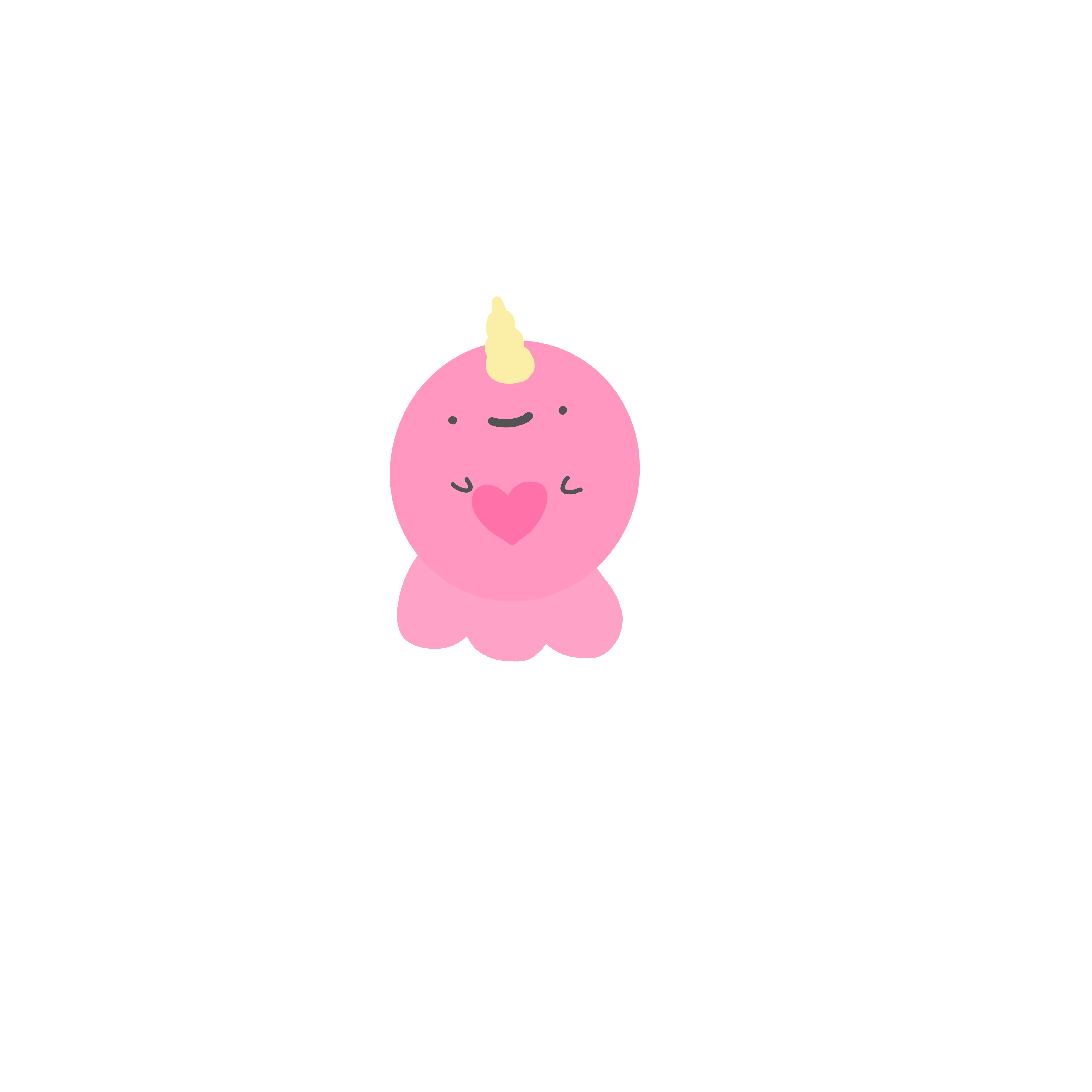
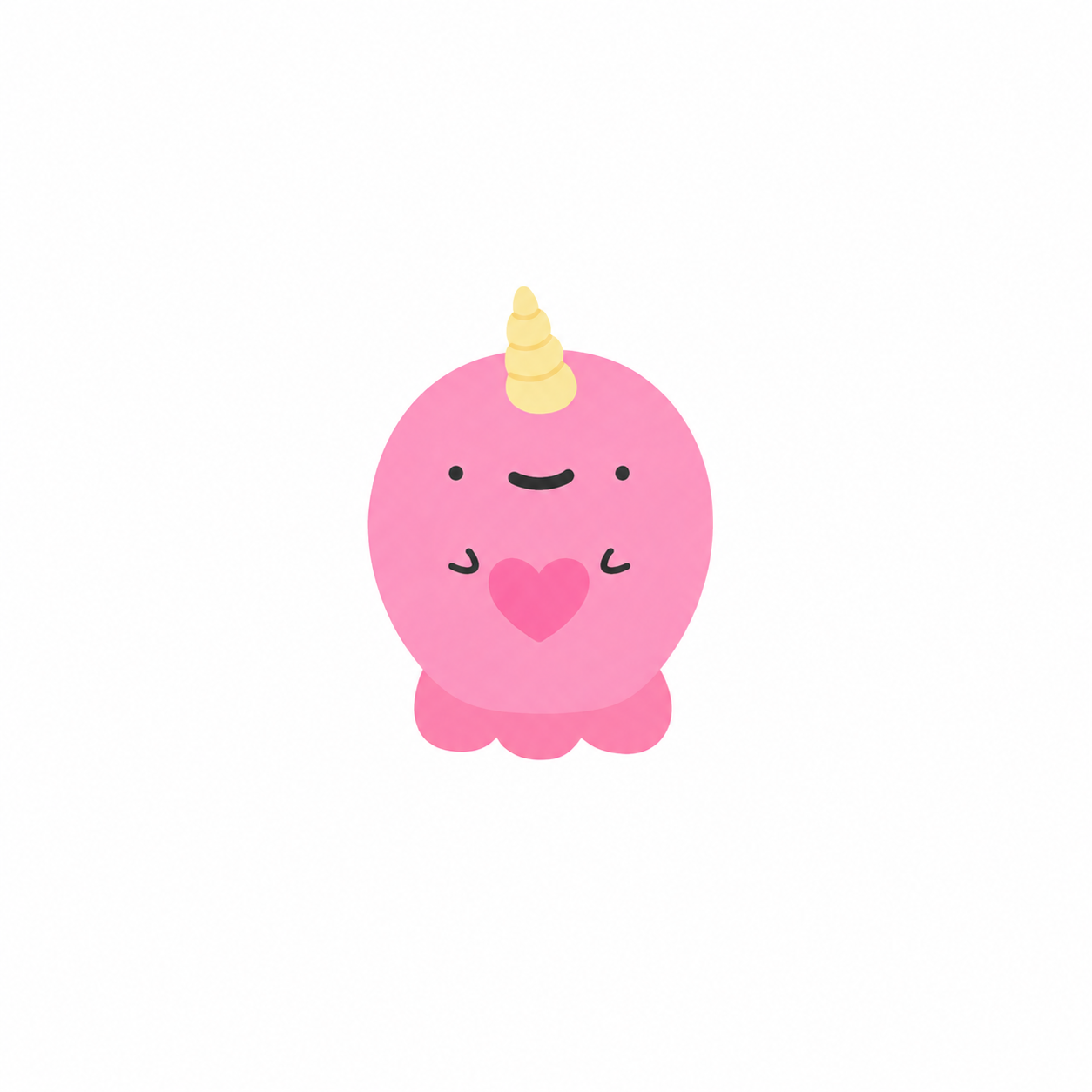
Now I wanted to see her move. I asked Chat to make Penny jump, but her colors, body, and movements kept changing. At one point, she had morphed into a narwhal that wasn’t Penny at all. I asked Chat to turn the polished version into pixel art and try again. It generated a sprite sheet and turned it into a gif. Penny was jumping! There were some mechanics that didn’t feel quite right — Penny was hovering midair for a while and there was no “bounce” to her jump — but I felt like I had something to work with. A few back-and-forths later, we had a jumping gif of Pixelated Penny that both looked and felt right.

I decided to introduce visitors to Penny through this animation, inside a Tamagotchi-inspired device, and took it from there.
As I saw Penny come to life, I kept wondering what else I could make her do. When something worked, it encouraged me to dream bigger and make her world more immersive.

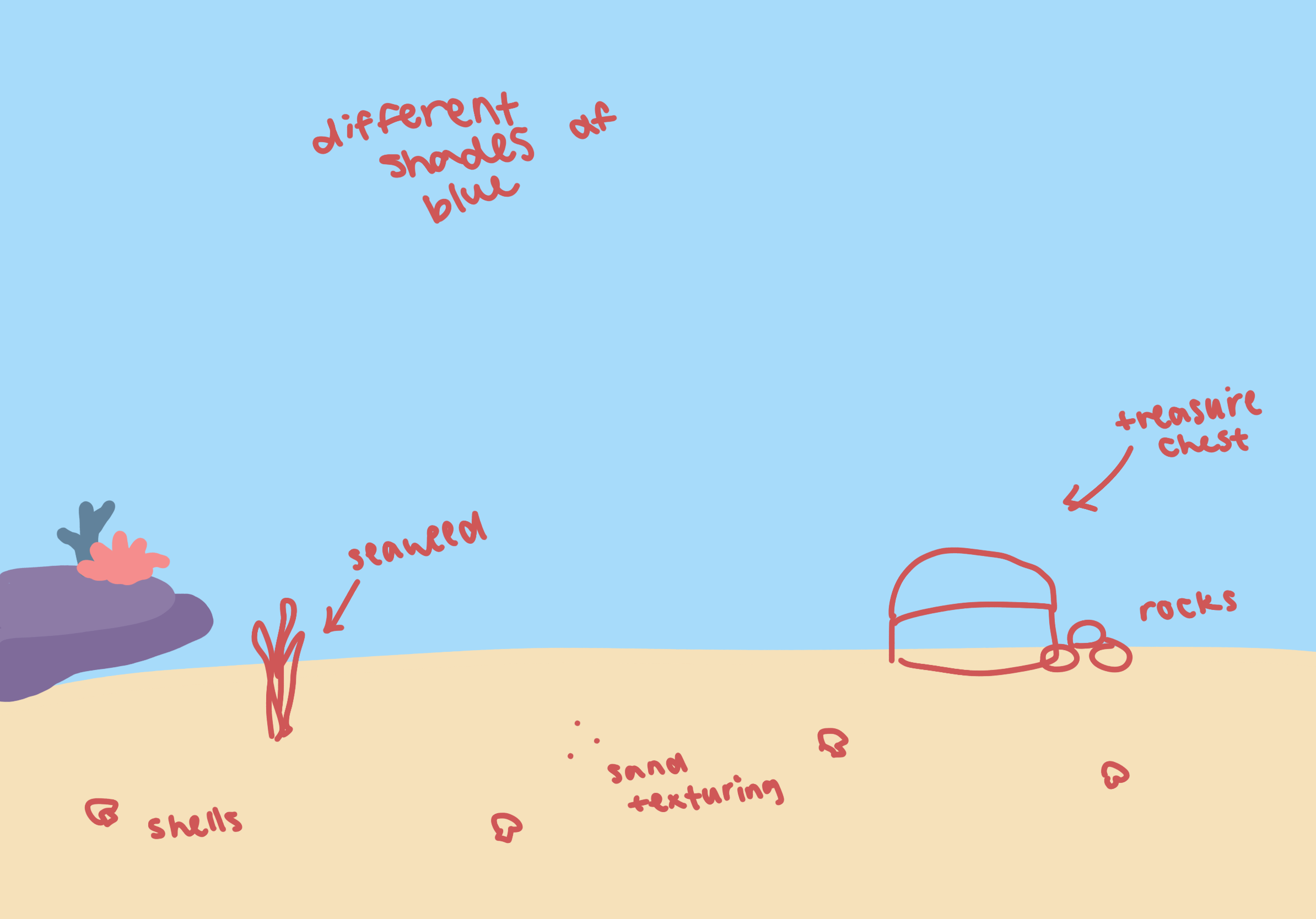
Iterations took mere minutes, and I could follow those ideas while I was still excited about them. Sometimes those iterations meant trying something entirely new; other times, they meant frustrating rounds of corrections to get Penny to look or move the way I envisioned. In the process, I discovered potential I hadn’t known AI had. I didn’t know Codex could animate. I also figured out how to communicate what I wanted. Noticing that Penny’s jump felt wrong was one thing; explaining she hovered too long and needed more was another.
Like a lump of clay, AI gives us something to experiment with before we know exactly what we want to make. With clay, you might know you want to make a creature without knowing its shape, expression, or personality yet. The material’s malleability allows you to instantly respond to what you create – you could try different body shapes, expressions, and develop the character of your creature as you shape it. As you make changes, new ideas may pop up, and you get to try those too! Working with generative AI can involve a similar back-and-forth. Though a little less tactile, you can have a general end goal in mind (like a digital portfolio) without knowing what it will look like, and explore possibilities with AI as you build.
What began as another task on my to-do list became what I can only describe as a playground – a space where I was allowed to explore and bring my visions to life. In our jam-packed lives, finding the time, space, and energy to play is easier said than done. Sometimes, though, there’s a little wiggle room in how we get things done. I needed a way to show people around my portfolio, and with AI I could give that job to a pink narwhal. For me, that felt a lot like doodling in the margins again.